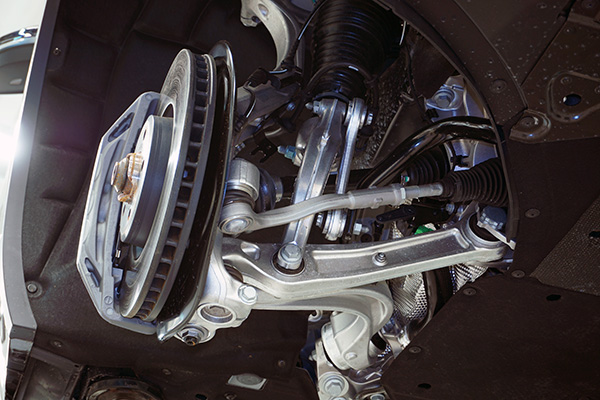
An air suspension warning and an adaptive suspension setting can sound like two names for the same feature. Both can change how the car feels, and some vehicles have both systems. They still perform different jobs.
Air suspension usually refers to the springs that support the vehicle and control ride height. Adaptive suspension commonly concerns dampers that change how movement is controlled. Knowing which system your car uses helps explain why a low corner and a harsh ride may need different repairs.
Air Suspension Uses Air Springs To Support The Vehicle
An air spring uses pressurized air to carry load in place of, or as part of, the spring arrangement. The system can include a compressor, valves, lines, and height sensors. Depending on the vehicle, it may adjust ride height or help maintain a consistent level as load changes.
That support is different from controlling how quickly the body moves after a bump. A vehicle with air springs still needs dampers. The exact layout varies, so a repair should begin by identifying which components are fitted rather than assuming that every suspension warning refers to an air leak.
Adaptive Suspension Changes Damping Response
Adaptive dampers alter their response through electronic control. The system uses driving information to decide how firmly to control suspension movement. A comfortable setting and a firmer handling setting may use the same springs while changing the damper's behavior.
That means adaptive suspension doesn't automatically mean air springs or adjustable ride height. A car can use conventional metal springs with electronically controlled dampers. The word adaptive describes how operation changes; it does not identify every component underneath. Checking the suspension option helps avoid ordering a part that looks right but belongs to a different system.
Air And Adaptive Suspension Can Work Together
Some vehicles combine air springs and adaptive dampers. The air system manages support or height while the damper system controls movement. The driver may choose a mode that affects both, making the systems feel like one feature even though separate components do the work.
A fault in one can affect the overall ride without proving the other has failed. A sagging corner can point toward the air system, while a change in damping may have a different cause. The inspection needs to separate those functions before an estimate replaces a complete assembly simply because the vehicle feels wrong.
Air Suspension Leaks Can Leave A Corner Low
A vehicle that sits lower after being parked may be losing air through a spring, line, valve, or another connection. The pattern can depend on temperature and how long it sits. A height sensor or control issue may also be involved, so the appearance alone doesn't identify the faulty part.
A compressor that runs frequently may be trying to compensate for a leak. Replacing the compressor without checking why it has been working so hard can leave the new unit exposed to the same demand. Finding the air loss and evaluating compressor operation together gives a more complete picture. A photograph taken after overnight parking can help show a height change that disappears later.
Adaptive Damper Faults Can Change Ride Feel
If the electronic controls cannot operate as intended, the suspension may use a limited or default response, depending on the design. The car can feel firmer, less controlled, or less responsive to mode changes. A warning may appear, but its wording does not automatically identify a failed damper.
Wiring, connectors, sensors, and power supply can all be part of the checks. Mechanical wear is still possible too. A leaking damper or damaged mount needs inspection even if the electronic system has not reported a fault. We compare the control information with the actual condition of the suspension.
Suspension Repairs Need The Correct Parts And Setup
Replacement parts should match the vehicle's air or adaptive system. A conventional component is not automatically interchangeable with an electronically controlled one. Some repairs also require height calibration, initialization, or other manufacturer-specified checks after installation.
Ask which steps the estimate includes and whether related alignment work is required. Pressurized air systems need the proper service procedure before disconnecting components, and height-changing systems need safe support. The finished repair should restore the intended function, not just remove the warning or temporarily raise a corner.
Air And Adaptive Suspension Problems Still Need Basic Checks
Tire pressure, tire condition, bushings, ball joints, and mounts can all affect the ride. Electronics won't fix looseness from a worn joint, and air springs won't correct an alignment problem. A wider inspection helps avoid blaming the most expensive feature for a problem elsewhere.
Describe whether the vehicle sits low after parking, rides harshly over sharp bumps, or changes during turns. Note the selected mode and any warning message. If the car suddenly drops, becomes unstable, or has inadequate clearance, stop driving and arrange an inspection rather than waiting for it to lift itself again.
Get Air And Adaptive Suspension Service In Garland, TX, With North Dallas Imports
If your vehicle sits unevenly or its ride changes unexpectedly, North Dallas Imports in Garland, TX, can inspect the suspension and explain whether the air system, adaptive controls, or another component needs attention.
Contact us to schedule an air or adaptive suspension inspection.