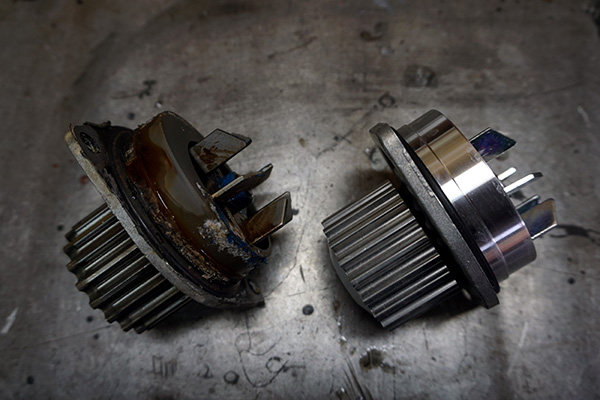
A failing water pump rarely announces itself with one big, obvious event. More often, it starts as a slightly warmer temperature reading in traffic, a faint coolant smell after parking, or a small drip you only notice once in a while.
The tricky part is that the engine can still feel normal right up until it doesn’t.
Water Pump Job In The Cooling System
The water pump keeps coolant moving through the engine, radiator, and heater core. When flow is steady, the engine sheds heat evenly, and temperatures stay predictable across different driving conditions.
As the pump weakens, coolant circulation becomes less consistent. That inconsistency is what sets the stage for temperature spikes, air pockets, and the kind of overheating that shows up at the worst possible time.
Water Pump Failure Symptoms
Some warning signs are physical, like noise or a drip. Others show up as changes in how the cooling system behaves, especially in stop-and-go driving or after a long idle.
Look for these common symptoms:
- Coolant spots under the front of the vehicle after it sits
- A sweet coolant smell after driving, even without a visible puddle
- Temperature is creeping up in traffic, then settling once you’re moving
- A chirping or grinding sound near the belt area that changes with RPM
- Steam or a faint haze near the front of the engine after a hot shutdown
If you notice more than one of these together, the odds of a pump issue go up.
Overheating From A Bad Water Pump
The first stage is usually a mild temperature rise under low airflow conditions, like sitting at a light or crawling in traffic. The radiator needs airflow to work well, so when the flow is reduced and airflow is limited, heat builds faster.
If the pump gets worse, the temperature spikes start happening more quickly and more often. The engine may cool down once you start driving again, which can tempt you to ignore it, but that pattern often means the system is losing its ability to stay stable.
Coolant Loss And Air Pockets
A worn pump can leak at the weep hole or around the gasket area, and even a small leak can introduce air as the coolant level drops. Air pockets are a problem because they interrupt circulation, and they can create hot spots inside the engine.
You might notice the heater output changing, like it blows warm at speed but cools off at idle. That can happen when coolant is not flowing through the heater core the way it should, or when air is trapped in the system and the heater core is not getting a steady supply.
Engine Damage That Can Follow
Overheating is where things get expensive. Metal expands with heat, and repeated temperature spikes can stress seals and gaskets. In more severe cases, overheating can warp sealing surfaces, which turns a straightforward cooling repair into a longer, more involved job.
Oil also takes a hit when an engine runs hot. High temperatures thin the oil, reducing its ability to protect bearings and other tight-clearance parts. If the engine has been driven hot repeatedly, wear can accelerate even if the vehicle still seems to run fine afterward.
Belt And Pulley Problems Around The Pump
A belt drives many water pumps, so pump failure can create issues beyond coolant flow. A failing bearing can cause wobble, noise, or belt misalignment, which can lead to belt wear or belt slip.
If the belt slips, the alternator and other accessories can be affected too, depending on the layout. That is why a squeal or grinding noise near the belt area deserves attention, even if the temperature gauge is not climbing yet.
What To Do When You Suspect Pump Trouble
Start by checking the coolant level when the engine is cool, then look for any fresh wetness around the front of the engine area. If the temperature has been creeping up, avoid heavy traffic, avoid long idles, and keep trips short until you get it checked.
One careful inspection can confirm whether the pump is leaking, whether the bearing is noisy, and whether there are other cooling system issues contributing to the problem. This is also a good time to consider regular maintenance, as old coolant and neglected hoses can shorten the life of the entire system.
If the temperature gauge starts rising quickly, treat that as a hard stop and shut the engine down as soon as it is safe.
Get Water Pump Service in Garland, TX with North Dallas Imports
We will check coolant flow, confirm whether the pump is leaking or wearing out, and explain the most practical repair plan based on what we find. Schedule your service and get ahead of overheating before it turns into engine damage.
We’ll help you get your cooling system back to steady, dependable temperatures.