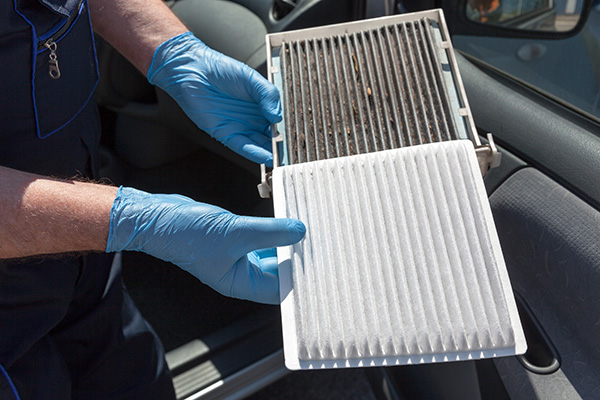
Your cabin air filter works every time you run the heat, air conditioning, or ventilation system. It catches dust, pollen, leaves, road grit, and other debris before that material gets blown into the passenger compartment.
Because the filter is hidden behind the glove box, under the dashboard, or near the cowl on many vehicles, it is easy to forget about it. Once it gets packed with debris, the first signs are usually weaker airflow, more dust inside the car, or a ventilation system that doesn't seem to work as well as it used to.
Weak Airflow From the Vents Is a Common Sign
A clogged cabin filter makes it harder for the blower motor to push air through the HVAC system. You might turn the fan up and hear it working, but the amount of air coming from the vents still feels weak.
At our shop, we compare airflow at different fan speeds and check the filter before assuming the blower motor is failing. If airflow improves noticeably with a clean filter, the restriction was doing more than most drivers realize. A heavily clogged filter can also make the defroster take longer to clear the windshield.
Dust Inside the Cabin Can Increase
If you are seeing more dust on the dashboard shortly after cleaning the interior, the cabin filter deserves a look. An overloaded, damaged, or incorrectly installed filter can't trap contaminants the way it should.
Dust and road debris can also get around the edges if the filter is the wrong size or not seated properly. During an inspection, we make sure the filter fits the housing correctly, rather than only checking whether the filter media itself is dirty.
Pollen Can Load the Filter Quickly During Certain Seasons
Pollen can fill a cabin air filter much faster than normal road dust, especially during heavy allergy seasons. The pleats can become coated with a fine yellow or gray layer that reduces airflow even though the filter does not look packed with leaves or large debris.
Drivers who spend a lot of time in traffic, park outside, or run the ventilation system on outside air can see the filter load up faster. If allergy symptoms seem worse inside the car or the vents start smelling dusty, checking the filter is a simple place to start.
Musty or Dusty Odors Can Come From the Filter
A dirty cabin filter can hold moisture, dust, pollen, and organic debris. Once those materials sit in a dark HVAC housing, they can create a stale or musty smell when the fan comes on.
The filter is not always the only source of odor. Mold or moisture buildup around the evaporator case can create similar smells. We check the filter first because it is easy to inspect, then look deeper into the HVAC system if the odor stays after the filter is replaced.
Visible Debris Means the Filter Is Past Due
If you remove the filter and find the pleats packed with dirt, leaves, seed pods, insects, or heavy dust, it is overdue for replacement. A good filter should still allow air to move through the media without debris covering it.
Common signs of a badly clogged filter include:
- Dark, heavily coated pleats
- Leaves or plant material trapped in the filter
- Dust falling out when the filter is removed
- Weak airflow at high fan speed
- A stale smell from the vents
- Longer windshield defrosting time
- More dust collecting inside the cabin
A filter does not need to be completely blocked before it starts affecting airflow.
Driving Conditions Change How Fast the Filter Gets Dirty
There is no single replacement interval that fits every driver. A vehicle used mostly on clean highways can go longer than one driven through construction zones, dusty roads, heavy traffic, or high-pollen areas.
That is why we prefer checking actual condition instead of replacing the cabin filter automatically at every oil change. Regular maintenance gives us a chance to see how quickly the filter is loading up and adjust the service interval based on how the vehicle is really used.
A Clogged Filter Can Make the HVAC System Work Harder
The blower motor has to move air through the filter before it reaches the vents. When the filter becomes heavily restricted, the motor works against more resistance.
That does not mean a dirty filter instantly burns up the blower motor, but it adds unnecessary load and reduces system performance. In hot Texas weather, weak A/C airflow is especially noticeable. A clean filter helps the system move the volume of air it was designed to deliver.
Do Not Judge the Filter Only by Mileage
A low-mileage vehicle can still have a filthy cabin filter if it spends most of its time in dusty or pollen-heavy conditions. On the other hand, a highway commuter can sometimes have a filter that stays cleaner longer than expected.
We look at mileage, time, environment, and actual filter condition together. If airflow is dropping or the filter is visibly loaded with debris, there is no advantage in waiting for an arbitrary mileage number before replacing it.
Get Cabin Air Filter Service In Garland, TX, With North Dallas Imports
If your vents have weak airflow, the cabin smells dusty, or you are seeing more debris inside the vehicle, North Dallas Imports in Garland, TX, can inspect the cabin air filter and HVAC airflow to see whether the filter is restricting the system.
Schedule a cabin air filter inspection and keep dust, pollen, and road debris from taking over the air you breathe inside the car.